
Westexe’s Growing Communities: our local community gardens and orchards
Community gardens take as many shapes as they are communities and types of gardens. They can be big or small, they can be in open or close spaces, on public or private land. They can be used to grow food, to support wildlife or wellbeing, to make a space more welcoming and beautiful, or to bring a group of residents together. They can be developed in a very structured and organised fashion, requiring quite a bit of resources, or in a more informal and low- key way. Often, community gardens have been developed in underused urban public or private spaces by local residents in their diversity of aims and dreams, but always by a collective and with a will to benefit their community, their neighbourhood, the space they live in, or our planet.
We are so lucky to have a great diversity of community gardens and orchards in our part of the city today, run by a wide range of community groups and organisations.
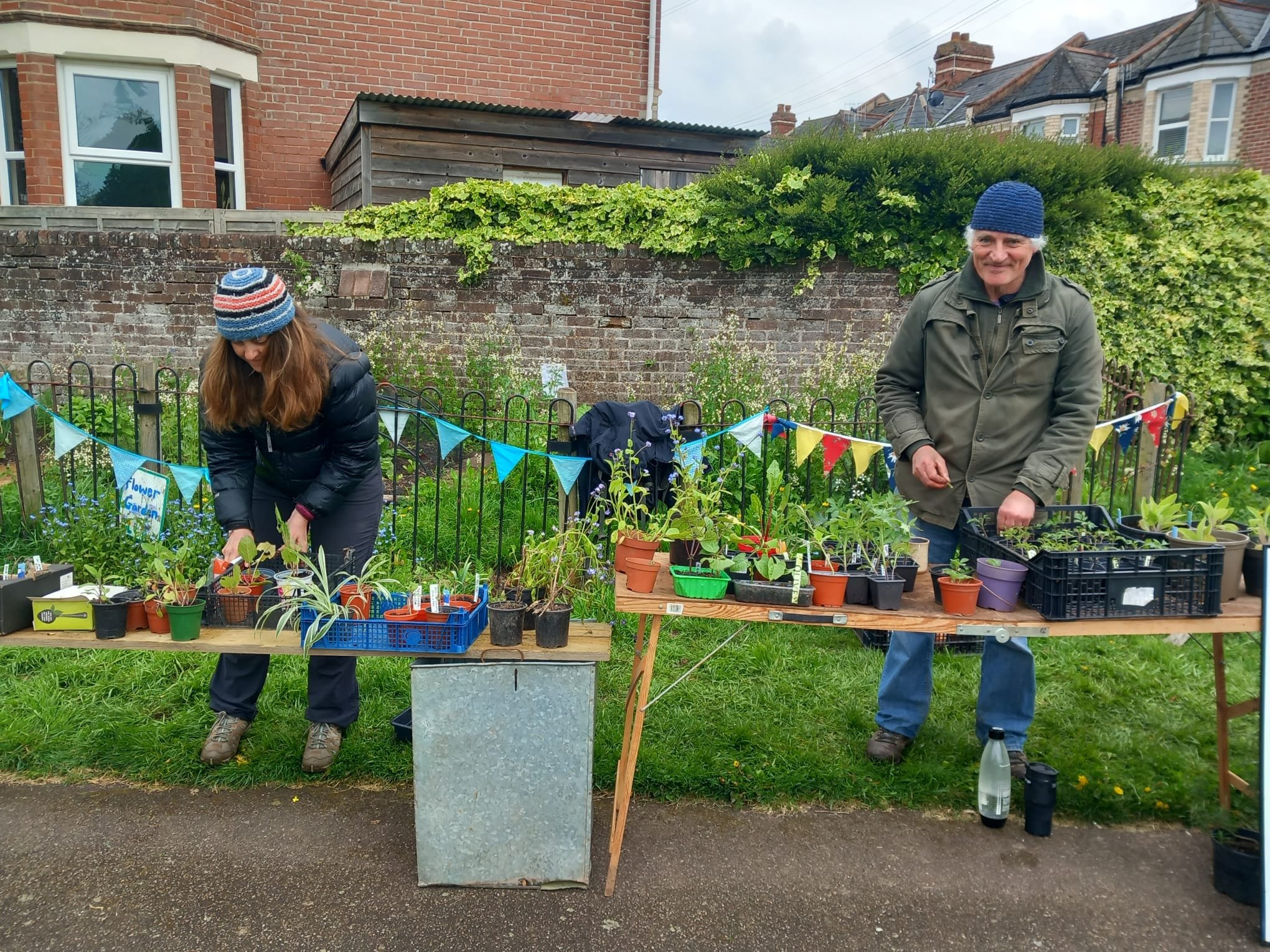
Open Day at St Thomas Community Garden, April 2023. Credits: Clemence Scalbert
Among the first community gardens in Westexe area is the one run by Refugee Support Devon on an allotment site. It provides a safe and welcoming place for refugees and asylum seekers to grow vegetables, fruits and flowers in a sustainable way, alongside the RSD's volunteers. It provides food as well as a connecting and soothing space. Community gardening is now well known to create supportive environment and improve wellbeing. This is not the only community garden on an allotment site: Cowick Lane allotments are lucky to have 2 community gardens! One of them is entirely dedicated to wildlife while the second is a space for the community. It is used for community events such as the Seed and Plant Swap in spring, a Harvest Festival, and some shared meals. It is open to all the plot-holders at Cowick Lane and brings them together in a way not usually available because everyone is normally working on their individual plots.
Some communities gardens have been developed in partnership with various local charities. For instance, the Jubilee Garden exists since 2021 on Exwick Parish Hall’s grounds. It is for the use of the YMCA residents and is also available to hire for community events. Another example: the Alibi Theatre has made its outdoor space available to a young community food growing initiative run by Zero Mile Gardens CIC.
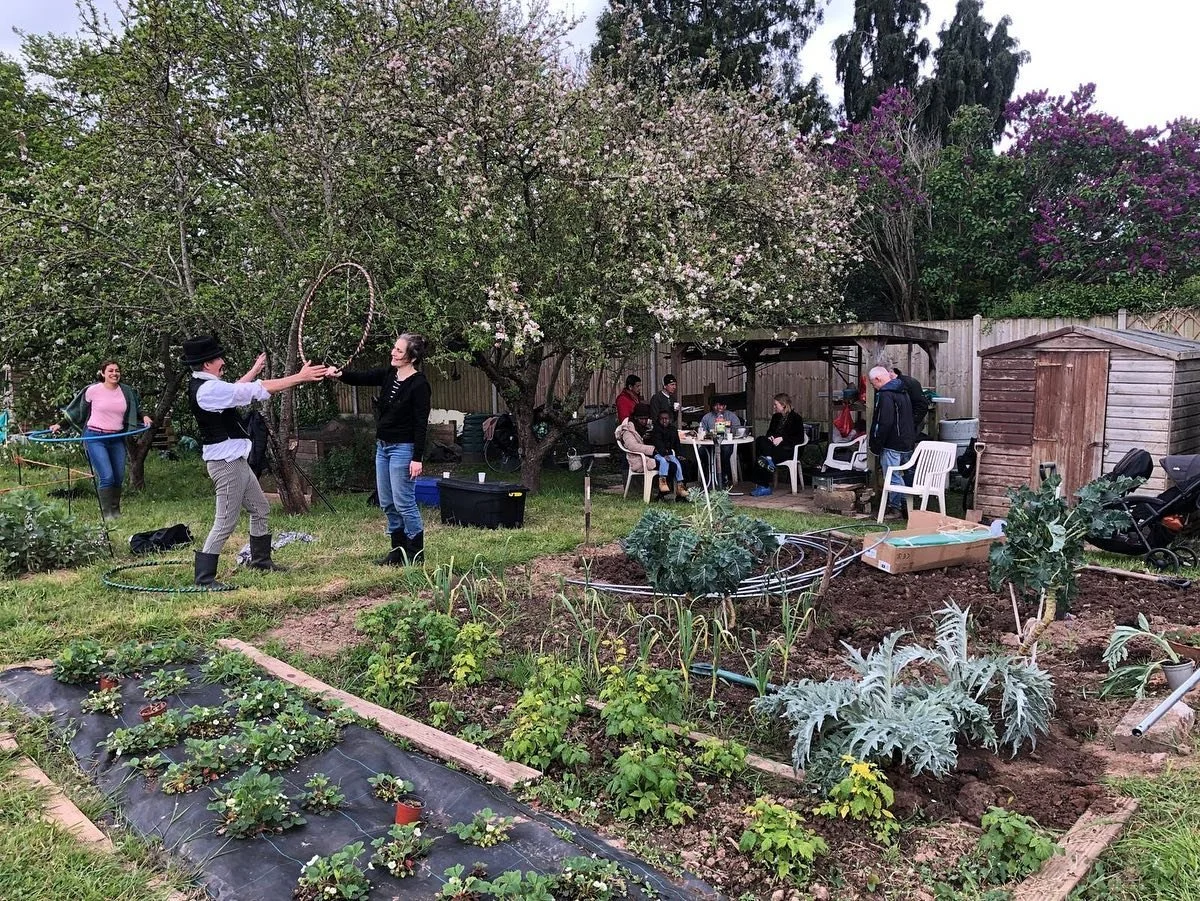
Open Day at Refugee Support Devon Allotment, 2024. Credits: Clemence Scalbert
Yet, most of our local community gardens are located in public parks and green spaces. The most recent addition is Farm Hill community Garden in Exwick initiated in 2024 by a local resident (also volunteer at St Thomas Community Garden) who wanted to transform an unused piece of land into a beautiful thriving community space. How did that happen? The resident got in touch with her community builder, they then got permission from the city council and got free wildflower seeds from the Devon Wildlife Trust. They organised a sowing activity and a litter pick, two great ways to raise awareness on a space and invite residents to join. The garden was started! Now they meet weekly to tend to the space making bug hotels, planting herbs in a disused bathtub, and planting trees. The space quickly turned into a valued community space and this without much resources: recycling is so important for community gardening to get second hand (sometimes free!) tools, planters, or sheds, and to keep a low carbon foot- print. Another example is St Thomas Community Garden, in St Thomas Pleasure Ground. It was originally created by Montgomery School in 2015 with the support of Bloom’in St Thomas, before being tended for by a group of residents whose focus is on sustainable food growing. They have also installed a community composting scheme that produce a lovely compost to feed the soil (while reducing waste!). In the near-by Cowick Barton Playing Fields, Cowick Roots and Recreation is another community group which has been very active for a long time in improving their green spaces. Among other things, they planted an orchard, and are now working on the creation of a sensory and well- being garden in Pinces Gardens. The recent focus on the community garden originated from a consultation with local residents, a very important practice to hear the needs of the community and to be as inclusive as possible.
Finally, let’s not forget the Flow, a large community orchard, of about 200 fruit and nut trees that runs from Exwick Mill field down to the Double Locks, nicely connecting Exwick and St Thomas along the Riverside Valley Park, run by Flow Exe River Orchard CIC. Heritage varieties of fruits from the South West and trees from warmer climate such as apricot or almond trees, that are now adapting to the UK due to climate change, were planted in 2017-8. The fruits and nuts can now be picked by the passer and provide food for wildlife! The Flow is now well- known for its beautiful wassail (an ancient custom of visiting orchards and singing to the trees to promote a good harvest) celebrated in January as well as for other events throughout the year. Community gardens and orchards are indeed about bringing the community together, through gardening sessions, harvesting, and celebrations. Most of the existing gardens mentioned here run such events in their spaces at different times of the year.
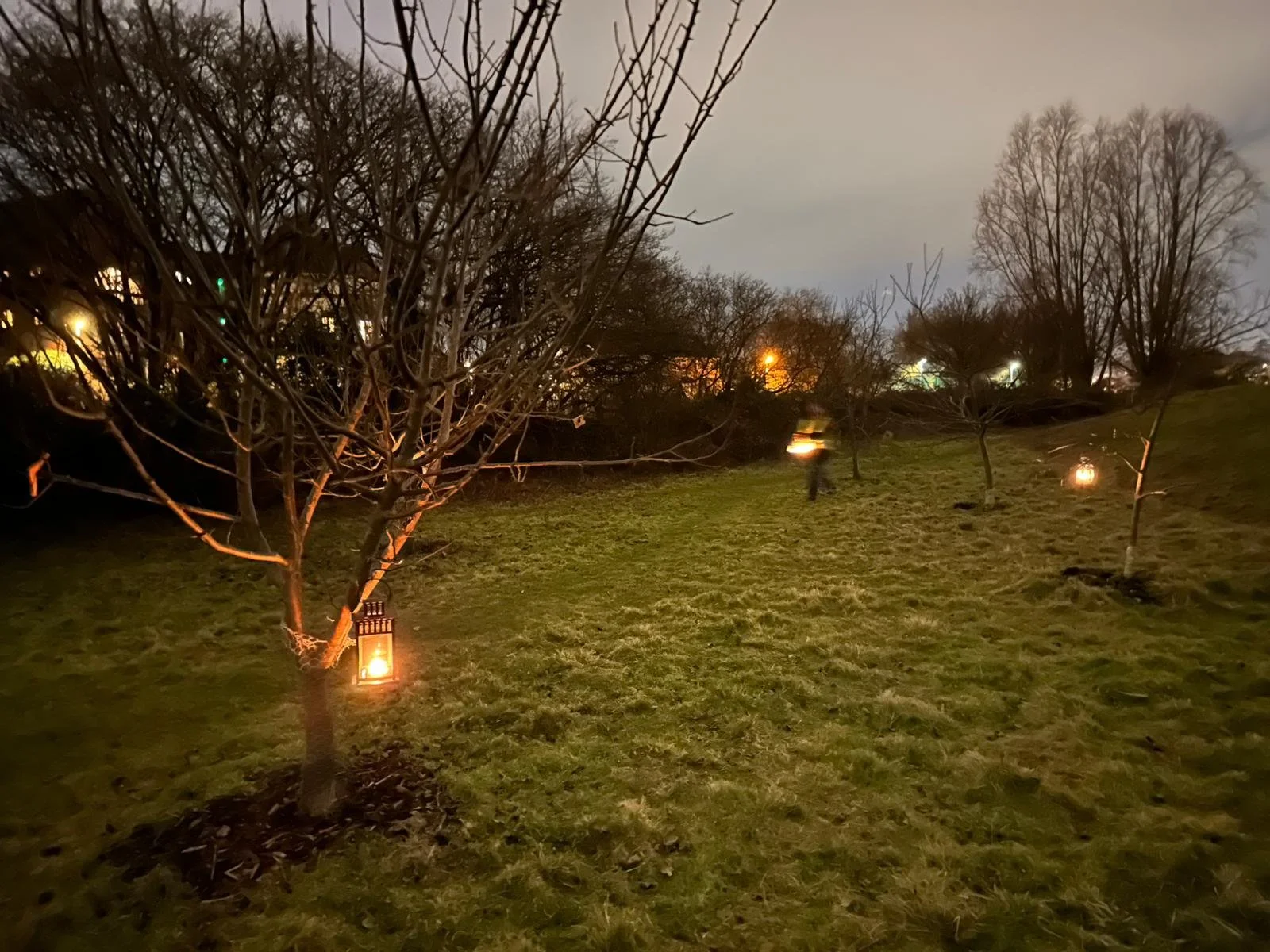
Wassail at the Flow Orchard, January 2025. Credits: Sue Ash.
It is great to see so many of these spaces emerging and connections being build within the community and across growing groups. Wouldn’t it be lovely to see these initiatives growing even further so they can support their communities, their access to food, and biodiversity? Wouldn’t it be lovely to see their work facilitated even further? National initiatives such as the Right to Grow campaign aim at identifying public land available to community groups and facilitating community access to growing spaces. Having such a registry may facilitate even further all these vibrant initiatives in Westexe. Let’s keep growing!
This article by Clemence Scalbert has previously been published in the West of the River, Issue 1, April 2025, pp.24-25.
